Here is something I wrote last summer (-__-) that I never got around to posting. I post it now in fond remembrance of days when it was possible to walk around outside in short sleeves at night without developing hypothermia. May those days return swiftly and with a vengeance, amen. (Cue snow melting dance.)
*****
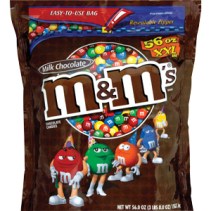
Binge-watching movie trailers is a most fearsome addiction. It’s like eating M&M after M&M after M&M from those XXL bags. You could go on forever, entertained by one hint-of-a-story after another.
At some point a few years ago, no doubt when I should have been sleeping instead of Youtubing, I came across the trailer for Hal Ashby’s Harold and Maude. Considering I had probably watched a dozen or so trailers before and a dozen or so trailers after, I’m not sure why I still remember it. Maybe it was Bud Cort’s face?
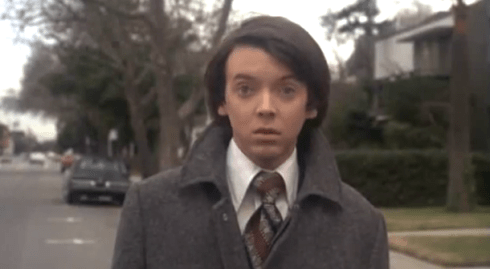
Maybe it was the weird 1970s-movie-aura? (à la Love Story or Sleuth, the latter of which deserves a post of its own…)
Or maybe, and this is most likely the case, it was because of the Cat Stevens song. You probably know it. It’s the song that goes…
If you want to sing out, sing out,
And if you want to be free, be free,
Cause there’s a million things to be-e-e-e you know that there are.
Etc. etc.
In any case, it turned out that my local movie theater was doing a midnight showing of Harold and Maude a while ago, and since I happened to be hanging out in the general vicinity listening to Keytar Bear with friends, I decided to bite the bullet and stay up past my bedtime for what ended up being a very satisfying movie-going experience.
For those of you who have yet to run into the Harold and Maude trailer within the bowels of Youtube, in short, it is about a death-obsessed almost-adult boy named Harold (Bud Cort) who falls in love with a cheerfully indomitable almost-80-year-old lady named Maude (Ruth Gordon). “Falls in love” isn’t quite the right phrase, although by the end of the movie Harold is dead set on marrying Maude (bad pun intended). It’s more like Harold has met the only person in the world who can make him see why life is worth the effort of living, and Maude has met the only person in the world who appreciates and needs the zeal for life she possesses. It’s the whole Anne of Green Gables “kindred spirits” thing, but in this story the kindred spirits are a bit more spirited. Activities include: funeral crashing, car stealing, tree planting, junkyard picnicking, reckless driving, police evading, sculpture stroking, and Viennese waltzing.
There are so many things about the movie that made me laugh, from the characters to the storyline to the brilliant composition of nearly every shot (this is a movie that lends itself to awesome film stills).
Also surprising (although not especially important, just something I personally found fascinating) were what I generally think of as 1990s/21st century phenomena, like use of the word “organic” in an ironic way and computer algorithm-generated dating. There’s something eerily prescient about this film…
Anyway, you may have some reservations about this movie given its whack-a-mole fixation on death (Harold’s favorite pastime is staging gruesome suicides) or the 60-year-age-gap romance (they kiss and everything). It can all seem a bit gimmicky as a premise. But I think if examined a little more closely, these two aspects of the movie point to a quite earnest preoccupation with what it means to engage with narrative and history (and even History).
So that I don’t completely spoil the movie for you (although I am probably partially spoiling it–sorry!!), I will describe it this way. Harold suffers from a sickness of spirit that seems to derive from a combination of wealth and a detachment from the rest of the world due to said wealth. For Harold, the act of dying is the thing he is most interested in. The reasons for dying and the narrative that precedes death is more or less nonexistent, unless you count suicide as escape from/revenge against a hilariously insufferable mother. Harold’s mother attempts to shake him from his death-obsessed malaise and throw him into the “real world” by threatening to send him to the Army and into the one-armed clutch of his uncle the general. Uncle Victor presents him with one possible narrative framework for death: the perverse pursuit of glory through blind patriotism. Maude supplies him with another: the inevitable end to a life fully experienced and energy well-spent.
As it turns out, Harold’s first wade into the shallow end of history isn’t basic training and the prospect of Vietnam but his visits to Maude’s train-car-turned-home, full of souvenirs and knickknacks from her past. In this memory-rich space, Maude tells stories of her life in turn-of-the-century Vienna and invites Harold to try a machine that lets you smell “Snowfall on 42nd Street.” The old train car (a forgivably clunky metaphor given how wonderfully magical it is) links Harold to the world beyond the borders of the place and moment circumscribed by his sheltered life.
It is through Maude’s being a living manifestation of history (if this seems like an overstatement, it will (hopefully) make more sense when you watch the movie…) in all its tumult, pain, and joy that draws Harold into the narrative unfolding in the real world, a world where holding onto life is difficult and therefore all the more worth living. For me, a solidly middle-class American girl who has grown up with all that modern technology and convenience have to offer, Harold and Maude was a good reminder to accord the act of living the respect and attention it is due.
Now, did Harold really have to be in love with Maude to learn this? Some people might say no. But would you be able to think of someone as your grandmother if she rides motorcycles, makes erotic sculptures, gives coy glances, and can effectively do everything a twenty-something year old can do, but better?
So–my rather unsophisticated conclusion is, (almost) nothing in this film is gratuitous–(most) everything seems to have its own quirky logic.
And therefore I conclude by saying, I hope someday you get to meet Harold and Maude too!
 frames askew